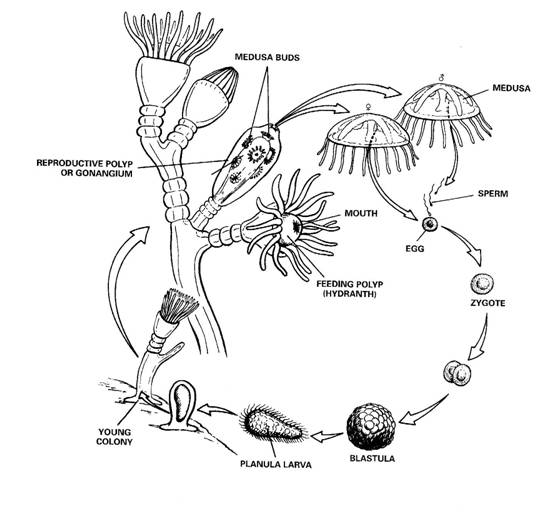
Life Cycle Of Obelia . During their life cycle, polyps reproduce asexually by budding and medusa reproduces sexually by produce gametes through meiosis. About press copyright contact us creators advertise developers terms privacy policy & safety how youtube works test new features press copyright contact us creators.
3 exposé cnidaires from www.slideshare.net
That's is the reason of telling obelia as a sea fur or hydrozoites. Start studying life cycles of obelia and aurelia. Hydroid colony reproduces by asexual budding to produce hydranths and blastostyles.
3 exposé cnidaires
The medusa, or jellyfish, swim freely and reproduce sexually, releasing eggs and sperm into the water. In the life history of obelia alternation of polypoid and medusoid generation occur. That's is the reason of telling obelia as a sea fur or hydrozoites. Testes and ovaries are similar in appearance.
Source: www.slideshare.net
Check Details
Testes and ovaries are similar in appearance. General feature and life history of obelia & aurelia based on the dominance of the medusoid or polypoid phase of the cnidaria life cycle classified as 1. Motile medusa and sessile polyp. There is no difference between the male and female medusae. Obelia is used in many zoology textbooks to exemplify the hydrozoa.
Source: courses.lumenlearning.com
Check Details
Such alternation of asexual and sexual phases in the life cycle of obelia is called metagenesis. Polyp is an asexual form and reproduces by asexual means while medusa is a sexual zooid and reproduces sexually. Learn vocabulary, terms, and more with flashcards, games, and other study tools. Obelia is dioecious as each medusa has reproductive organs of only one sex..
Source: amknana.blogspot.com
Check Details
The medusa, or jellyfish, swim freely and reproduce sexually, releasing eggs and sperm into the water. The life cycle of obelia has two stages; The sedentary hydroid colony alternates with the pelagic medusa phase. Obelia is dioecious as each medusa has reproductive organs of only one sex. It is clearly evident from the life history of obelia that there is.
Source: www.slideshare.net
Check Details
The body plan of obelia medusae, however, is unique among the hydrozoa. A distinct alternation of generations or metagenesis is present in the life history of obelia. There are gastrozooidsthis available on this mature colony. During this stage of life, the confinement of obelia is to the substrate surfaces. They are explained as follows:
Source: www.slideserve.com
Check Details
General feature and life history of obelia & aurelia based on the dominance of the medusoid or polypoid phase of the cnidaria life cycle classified as 1. Obelia is used in many zoology textbooks to exemplify the hydrozoa life cycle. Furthermore, gastrozooidsthis refers to individual hydranths. A distinct alternation of generations or metagenesis is present in the life history of.
Source: www.biology.ualberta.ca
Check Details
Obelia is used in many zoology textbooks to exemplify the hydrozoa life cycle. In the whole life, obelia passes through three important phases like polyp, blastostyles, and medusa. A distinct alternation of generations or metagenesis is present in the life history of obelia. This phenomenon is known as alternation of generation. Aurelia is dioecious species, in other words male and.
Source: www.youtube.com
Check Details
The life history may be represented as male and female gametes → zygote → planula larva → hydrula → colony → sexual medusae → gametes → zygote and so on. Start studying life cycles of obelia and aurelia. The asexual polypoid generation alternate with a sexual medusoid generation. All the obelia species begin as polyps that are connected to a.
Source: www.bioscience.com.pk
Check Details
This stage of obelia is a branched filament like structure and remains attached with the substratum. A distinct alternation of generations or metagenesis is present in the life history of obelia. Obelia is used in many zoology textbooks to exemplify the hydrozoa life cycle. The body plan of obelia medusae, however, is unique among the hydrozoa. All the obelia species.
Source: dev.biologists.org
Check Details
Obelia is used in many zoology textbooks to exemplify the hydrozoa life cycle. A) asexual reproduction the polyps reproduce asexually by the process of budding. The medusa, or jellyfish, swim freely and reproduce sexually, releasing eggs and sperm into the water. The life cycle of obelia has two stages; All the obelia species begin as polyps that are connected to.